
Getting involved in a sweat equity agreements 2026 can offer a significant upside for anyone willing to invest their time and skills early, especially in a fast-moving startup environment. The concept seems simple: instead of cash, I get ownership in the business for my valuable work or advice. However, the fine print can shape not only how much I ultimately receive but also how much control or protection I have along the way. In this article, I’ll explain how typical sweat equity contracts in startups work, which terms are essential, and the traps to watch for, including vesting, dilution, and shareholder rights. I’ll also check out common structures, share real-world examples, and answer frequent questions, so anyone considering sweat equity in 2026 can move forward with confidence.
Sweat Equity Basics: How These Agreements Work
Most startups operate with tight budgets. Sweat equity enables crucial team members, consultants, or advisors to join early and contribute meaningful value without an immediate paycheck. My “payment” comes as equity, usually in the form of stock or membership interests, that becomes mine based on my ongoing contributions.
In a sweat equity agreement, I often see contracts that specify the percentage of the company I’m working toward, how and when I earn those shares, and the detailed terms governing this exchange. These sweat equity agreement terms usually include a clear description of my expected deliverables, timelines for completion, and how to handle situations if either side can’t follow through. Ironing out these details up front is really important to avoid confusion and disputes as the business grows. Let’s check out the most critical elements next.
Key Terms in Sweat Equity Agreements for 2026
Knowing exactly what I’m agreeing to is essential. Typical sweat equity contracts in startups will address these crucial agreement terms:
- Equity Grant: How much ownership I can earn, described as a percentage or as a fixed number of shares or membership interests.
- Vesting Schedule: When and how I actually gain rights to my equity.
- Cliffs and Milestones: Special conditions I need to meet before equity starts vesting, or steps where I receive chunks of equity based on work achieved.
- Dilution Protections: If or how my percentage changes when new shares are issued.
- Shareholder Rights: Rights and privileges I have as an equity holder, such as receiving advance notice of major company decisions, receiving information, and exercising voting rights.
- Exit Clauses: Rules about leaving the company, selling my equity, or what happens if the company gets acquired or dissolved.
Understanding all these sweat equity legal considerations before signing anything protects both my time and my financial upside. Missing out on these crucial areas can mean losing my stake or being surprised by new rules later.
Understanding Sweat Equity Vesting Schedules
One of the most important things in any sweat equity agreement is the vesting schedule. Vesting means I earn my shares gradually, tied to the time I spend working or finishing set goals. Companies use vesting to ensure team members stay for a reasonable period, rather than walking away with significant ownership after a short tenure.
Most sweat equity vesting schedules in startups stretch over two to four years. A typical contract could say that my shares vest monthly after a one-year cliff. This means nothing is earned until I’ve been contributing for 12 months, then I start getting a portion of shares each month going forward. Other times, contracts use milestones instead. Here, I earn equity by meeting agreed-upon targets, such as launching a new product feature, closing sales, or completing a key project.
- Cliff Periods: If I leave before the cliff, I don’t get any equity. After the cliff, vesting begins, and shares start coming my way.
- Milestone-Based Vesting: My equity is linked not to time, but to specific achievements or deliverables completed for the company.
I always make sure I’m clear on these details. If I’m working for free or at a reduced rate, I need to know exactly when my stake becomes real. Early clarity smooths the whole process and keeps motivation high for both sides.
What is Dilution and How Does It Affect Sweat Equity?
Dilution can be confusing but is super important in sweat equity contracts for startups. Dilution happens when the company issues more shares, usually to raise more funding or to bring in new partners, so each individual piece of the company pie gets a little smaller. If I owned 5% before a big investment round, I might own less than 5% after new shares are added, even if the dollar value of my stake goes up.
Some deals have anti-dilution clauses or protection that shield early team members from getting squeezed out. Others don’t, so dilution is just part of the risk. Reading how dilution works in my sweat equity agreement, and knowing whether I have any protection or if my percentage changes, helps me decide how much effort is worth putting in. This is especially important when the startup expects to raise outside money in the future, as every new round can affect my cut.
Legal Protections and Shareholder Rights for Sweat Equity Holders
Not all equity is treated equally. Some sweat equity deals grant me full voting rights and access to company info; others offer only economic upside with little say in big decisions. Sweat equity shareholder rights are shaped by laws in my location, the company’s corporate structure, and what’s spelt out in my contract.
- Voting Rights: Whether I get to vote on major company events, like selling the business or electing board directors.
- Information Rights: What kinds of company financials or updates I can see, such as quarterly earnings, board minutes, or cap table details.
- Tag-Along and Drag-Along Rights: What happens if the company is sold, and whether I can sell alongside majority holders or be required to sell my shares too.
- Buyback Rights: Whether the company can (or must) buy back my shares if I leave, and at what price.
I’ve found that some founders want to reserve as much control as possible and may offer nonvoting shares or limit access to sensitive information. Asking about this up front and getting updates written into my contract helps me avoid surprises that can affect my investment down the road.
Sweat Equity Exit Clauses and What Happens If You Leave
Many sweat equity agreements include rules, called exit clauses, about how and when I can sell, transfer, or keep my shares if I stop working with the company. These sweat equity exit clauses are especially important because early-stage companies often get acquired, shut down, or mix things up quickly.
- Good Leaver/Bad Leaver Provisions: If I leave on good terms, I may keep my vested equity. Leaving for specific reasons, like a major dispute or cause, could result in forfeiture of some or all shares.
- Buyback Clauses: Sometimes, if I leave, the company has the right to buy my shares at a set price or fair market value, preventing outsiders from landing unexpected stakes.
- Transfer Restrictions: I may need board or founder approval to sell or transfer my shares outside the company, helping founders stay in control.
- Change of Control Clauses: If the company is sold, there may be rules governing how much I receive or whether my shares convert to cash or to new shares in the buyer’s company.
Getting these risks and processes clear up front helps me avoid hard feelings or legal fights later on, especially if the business takes off or changes direction. If I’m counting on a big payday, clear exit terms are a must.
Common Types of Sweat Equity Structures in Startups
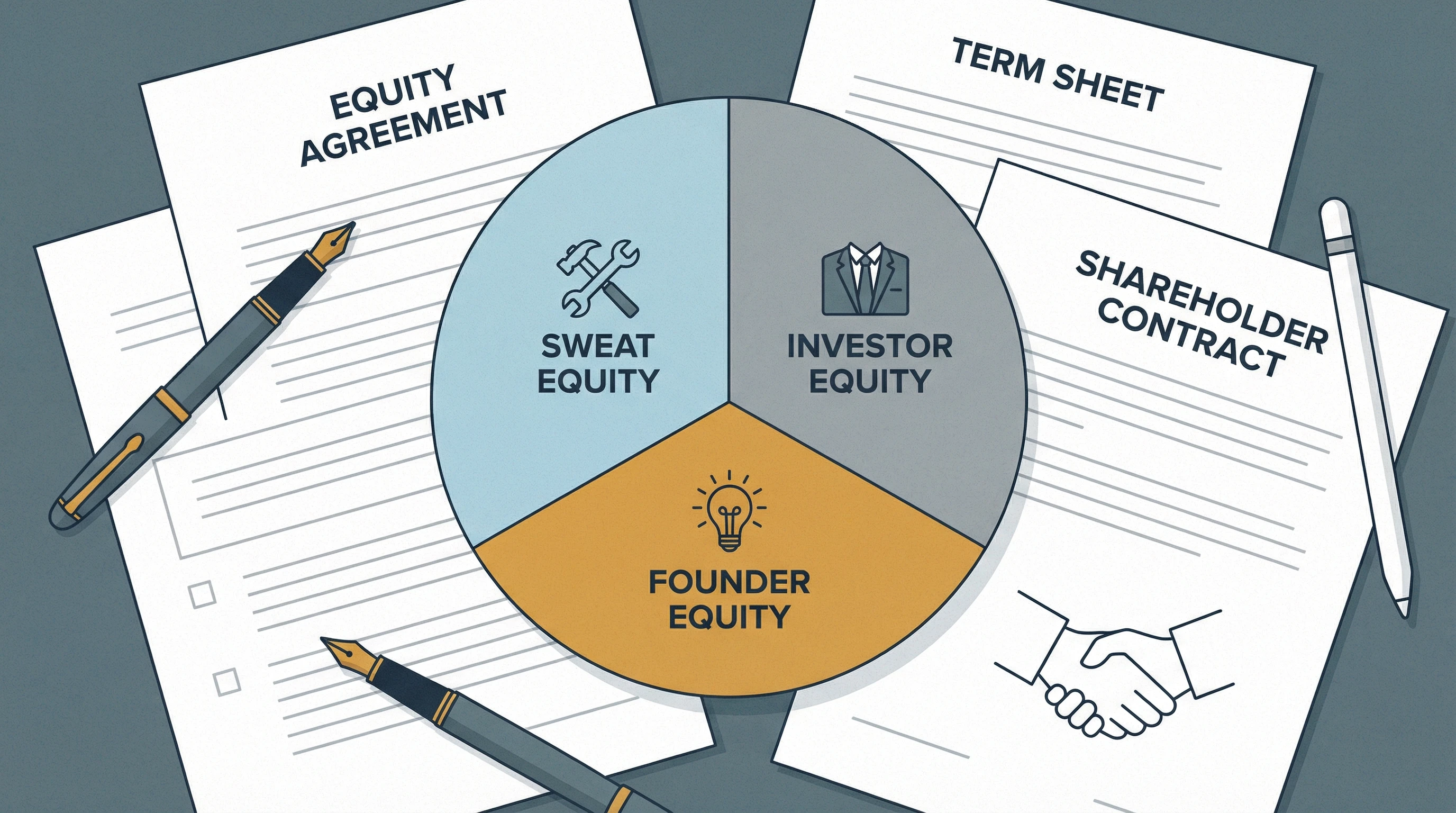
I see a few main ways companies organize sweat equity deals, depending on corporate structure and the roles of different contributors. Here’s how startup sweat equity arrangements usually break down:
- Restricted Stock: I receive shares that are subject to vesting and sometimes buyback if I leave early. This setup is common in C Corporations, especially for founders and early employees.
- Stock Options: Instead of straight ownership, I receive the right to buy shares at a fixed price later, once my options have vested. This is a familiar approach for tech startups.
- Membership Interests: For LLCs, I might receive profits interests or membership shares granted over time. These reward me with a slice of company income and sometimes voting rights.
- Phantom Equity: Some companies offer the economic value of share ownership if the company is acquired or hits a liquidity event, but without actual shares or shareholder rights until a certain milestone. This can work for key advisors or contractors.
I always ask for a clear explanation and consult an expert who understands sweat equity legal considerations, especially since taxes, rights, and risks can look very different under each model. Picking the right structure can save a lot of headaches later.
How to Negotiate Sweat Equity Terms Safely
Even for early-stage startups, negotiating strong sweat equity agreement terms protects me. Here’s what I focus on in every conversation:
- Clarity: I make sure the contract spells out deliverables, expectations, exact equity to be earned, and the whole vesting schedule in plain language.
- Dilution: I ask if I will get any anti-dilution protection or how future fundraising might change my percentage.
- Exit Plans: I look for clear rules on what happens to my equity if I leave or if the company is acquired. The wording of my sweat equity exit clauses can make a huge financial difference.
- Protection for My Work: If my contributions are tied to a big milestone or product release, I try to link vesting to those milestones, not just to time in the business, to make sure my specific work is rewarded.
Bringing in a lawyer or an advisor who has real-world experience with startup equity deals is money well spent. I’ve seen too many deals where founders and contributors end up in messy conflicts because vague or missing contract terms led to misunderstandings.
Pitfalls and Red Flags in Sweat Equity Agreements
I watch out for a few common traps when reviewing sweat equity contracts that startup founders offer. Some red flags include:
- Unclear or missing vesting schedules, leaving it up to the company’s future discretion and making my stake uncertain.
- Overly broad “for cause” definitions that let the company take back my vested shares without strong reasons.
- No protection against massive dilution in early investment rounds, which can reduce my equity much faster than expected.
- No information or voting rights, leaving me in the dark about company changes that could affect the value of my equity.
- Unreasonably long cliff periods or milestone requirements that are either hard to prove or outside my control to achieve.
Taking the time to walk through each sweat equity legal consideration isn’t negative; realistic expectations on both sides help build trust and keep me from wasting time on a setup that was never going to benefit me. Clear contracts help everyone stay friends even as the startup grows and changes.
Real-World Examples: Sweat Equity in Action
To make this all a bit less abstract, here’s a quick breakdown of sweat equity scenarios I’ve seen and what they teach:
- Example 1: I joined a tech startup’s advisory board with a two-year vesting schedule, a six-month cliff, and 1% equity. When the startup raised a big round, my contract said I’d only be diluted if my total stake dropped below 0.5%. This detail gave me peace of mind that I wasn’t working toward nothing and helped me stick with the company through early uncertainties.
- Example 2: A freelance developer signed a sweat equity deal based on “success milestones.” Her equity only vested when the app hit specific user and revenue targets, keeping goals clear and also pushing her to add real value. Linking equity to big achievements kept both sides focused and honest about what mattered most.
- Example 3: I’ve seen deals stall when a team member tried to sell their sweat equity early, but the agreement’s exit clause gave the founding team the right to buy back shares at their original price, not market value. If I’m counting on a big payout from an exit, understanding those terms up front is absolutely essential.
Frequently Asked Questions About Sweat Equity Agreements that may be helpful during 2026
I get many common questions from people considering a sweat equity deal for the first time. Here are a few, with practical advice from my own experience and the input of trusted advisors:
Question: What happens if the company gets acquired before my sweat equity fully vests?
Answer: Most contracts include an “acceleration clause.” Sometimes, all my unvested equity vests immediately if the company is sold; in other cases, only a piece vests or none at all. Reading this section of the contract closely protects me in the event of a quick buyout or a surprise exit event.
Question: Will I owe taxes on sweat equity?
Answer: Depending on the type of equity (stock, options, profit interest), I might owe taxes when shares vest, at grant, or when I sell. Working with a tax professional helps avoid a surprise tax bill. In the US, making an “83(b) election” can make a significant difference by allowing me to lock in a lower share value early, which could reduce my taxes later.
Question: Can I negotiate better terms if I’m bringing something unique to the table?
Answer: Yes! If my skills, experience, or network are in high demand, I have a better shot at negotiating a bigger equity stake, faster vesting, or more control. Founders often have wiggle room here, especially during the early stages when attracting strong talent is tough.
Big Takeaways for Anyone Considering a Sweat Equity Deal during 2026
I always remind myself that the paperwork is just as important as the handshake. The smartest sweat equity agreements spell out clear deliverables, timeframes, and protection against surprises like dilution and sudden exits. I look closely at the vesting schedule, make sure I understand my rights, and don’t hesitate to negotiate for what I think is fair. Thorough research can help me make smart decisions, and checking every sweat equity legal consideration saves time and headaches for everyone involved.
Reading every line, asking my own questions, and getting qualified advice gives me the best shot at growing my upside without taking on more risk than I bargained for. If I put in the work early to make these contracts fair and transparent, both founders and contributors have the foundation to build something successful together. Sweat equity, when handled right, can be the fuel that drives ideas from day one all the way to eye-catching wins down the road.